Mainstream mental health frameworks often treat distress as a personal problem— something to be diagnosed, managed, or medicated in isolation.
Abolitionist mental health asks deeper questions: Why are so many people struggling? What conditions create harm? And what would it look like to actually be free?
Over four sessions, we'll dig into the history of mental health systems, explore what healing can look like outside of institutions, practice real skills for supporting ourselves and each other, and imagine what care without cages could actually look like. No clinical jargon or one-size-fits-all solutions– just real conversation, honest history, and tools you can actually use.
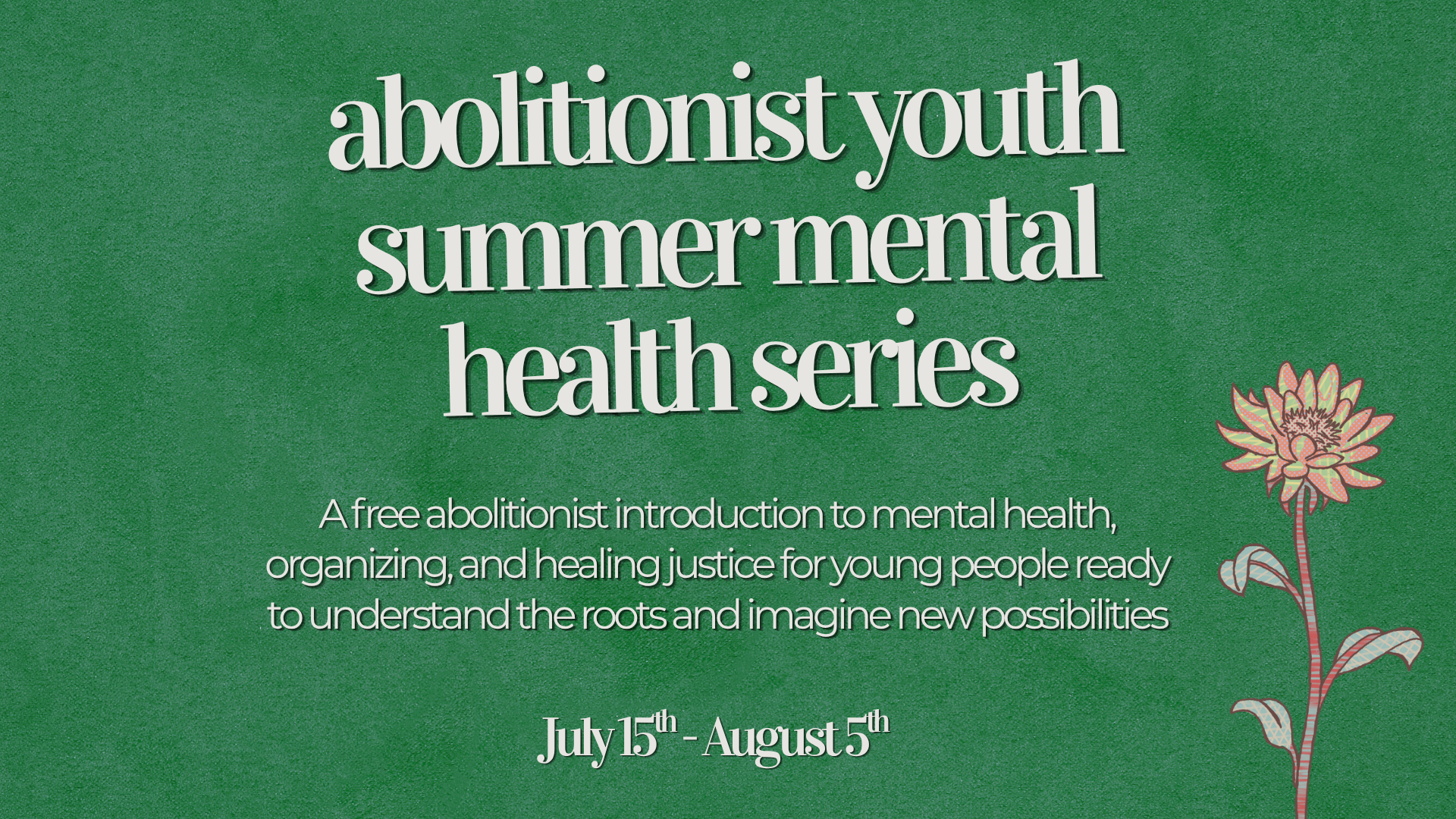
July 15th - August 5th / 1:00-3:30 PM ET
Registration link coming soon!
By the end of this series, youth will be able to…
Name the system for what it is: understand how psychiatric diagnosis, school policing, and psych incarceration are connected, and why responses to oppression are not disorders
Connect your body to the bigger picture: Understand how structural harm lives in the nervous system, and practice grief, ritual, and somatic tools to support yourself and others
Show up for the people you love: Use anti-carceral peer support skills to check in on someone without defaulting to therapy referrals or calling for help
Know what's possible: Know that non-carceral alternatives (peer respites, mutual aid networks, community crisis response) already exist, and understand how to build and fight for more
Make something real: Leave with a completed project (a piece of writing, a map, a zine, or a teaching tool) grounded in your own experience and analysis; ready to be shared!
Find people with shared experiences: Build relationships with a cohort of young people doing this work— and carry forward community, language, and at least one concrete next step for your own healing or organizing